Information magazine of the Department of Industrial Engineering
Università di Trento
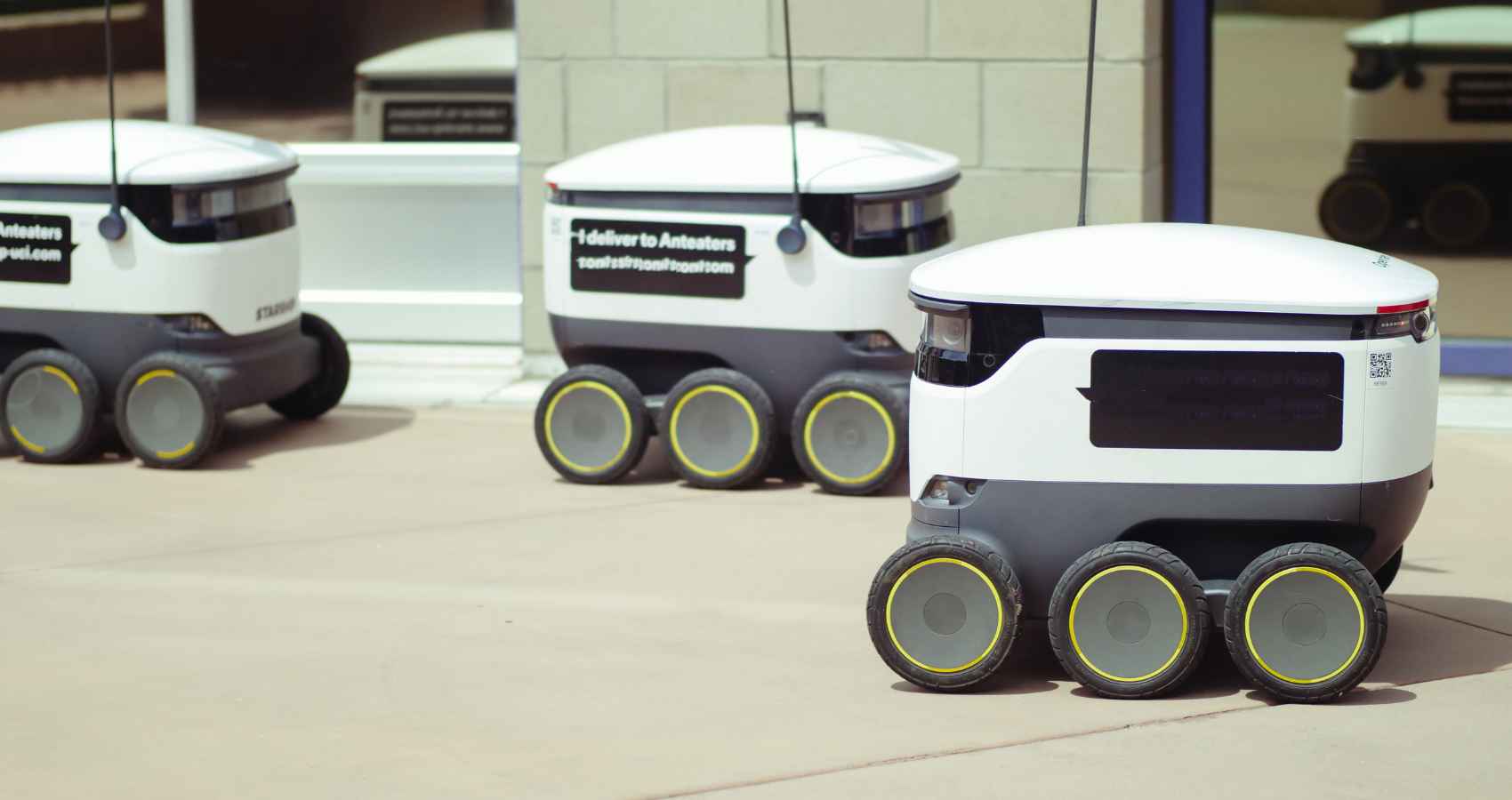
From autonomous vehicles for logistics and drones for environmental monitoring to robots employed in rescue operations or the exploration of hostile environments, autonomous systems are playing an increasingly important role in contemporary society. Behind these technologies, however, lies a complex scientific challenge: how can we ensure that a robot reaches its objective reliably, safely, and robustly, even when the available information is incomplete or the surrounding environment is unpredictable?
This project focuses precisely on these issues, at the intersection of control theory, autonomous robotics, and cyber-physical systems.
Many navigation algorithms used today assume that the vehicle knows its position within a map, thanks to absolute localization systems such as GPS. In reality, however, there are many scenarios in which this information is unavailable—for example, robots operating indoors, underwater, beneath dense vegetation, or in areas lacking communication infrastructure.
In these situations, the vehicle must rely exclusively on its onboard sensors, such as cameras or sonar, reconstructing its position only relative to the surrounding environment.
This research addresses the problem by developing navigation algorithms based solely on relative measurements, described through polar coordinates. This approach has made it possible to design computationally efficient control strategies, making them suitable even for robots equipped with limited hardware resources. The results are applicable to both ground vehicles and autonomous marine vehicles equipped with simple vision systems.
Reaching a destination is not enough. In many applications, it is essential to ensure that the robot avoids unexpected obstacles and always operates safely.
This challenge is particularly evident in autonomous driving: a vehicle must be able to react correctly to the sudden appearance of a pedestrian, another vehicle, or any potentially dangerous situation.
Many existing techniques address navigation and safety as a single optimization problem, resulting in complex and computationally expensive algorithms. Furthermore, it is well known that under certain operating conditions these methods cannot simultaneously guarantee both goal achievement and obstacle avoidance.
To overcome these limitations, this work proposes a new methodology based on so-called hybrid dynamical systems. The idea is to combine multiple specialized controllers, activating them dynamically according to the operating conditions. In this way, the robot can follow the desired trajectory during normal operation and, whenever necessary, temporarily modify its behavior to avoid obstacles without compromising the overall stability of the system.
The theoretical analysis demonstrates that this approach simultaneously guarantees goal achievement and compliance with safety constraints for a broad class of autonomous vehicles.
Finally, the project addresses a topic that has received relatively little attention in the literature: the avoidance of intrinsically dangerous operating configurations.
In the case of drones, for example, certain dynamic conditions may compromise flight stability. A truly reliable control system must therefore not only avoid external obstacles but also prevent the vehicle from entering potentially critical states.
Here again, the hybrid systems approach has made it possible to develop control strategies capable of guaranteeing navigation toward the target while simultaneously avoiding undesirable operating regions.
Overall, this work contributes to the development of rigorous, robust, and practically implementable control methodologies. The results demonstrate how advanced mathematical tools can be translated into concrete algorithms for the safe autonomous navigation of ground, marine, and aerial robots.
In a future where autonomous vehicles will become increasingly present in our cities, infrastructures, and natural environments, the ability to guarantee safety and reliability represents not only a technological challenge but also an essential prerequisite for their widespread adoption.