Information magazine of the Department of Industrial Engineering
Università di Trento
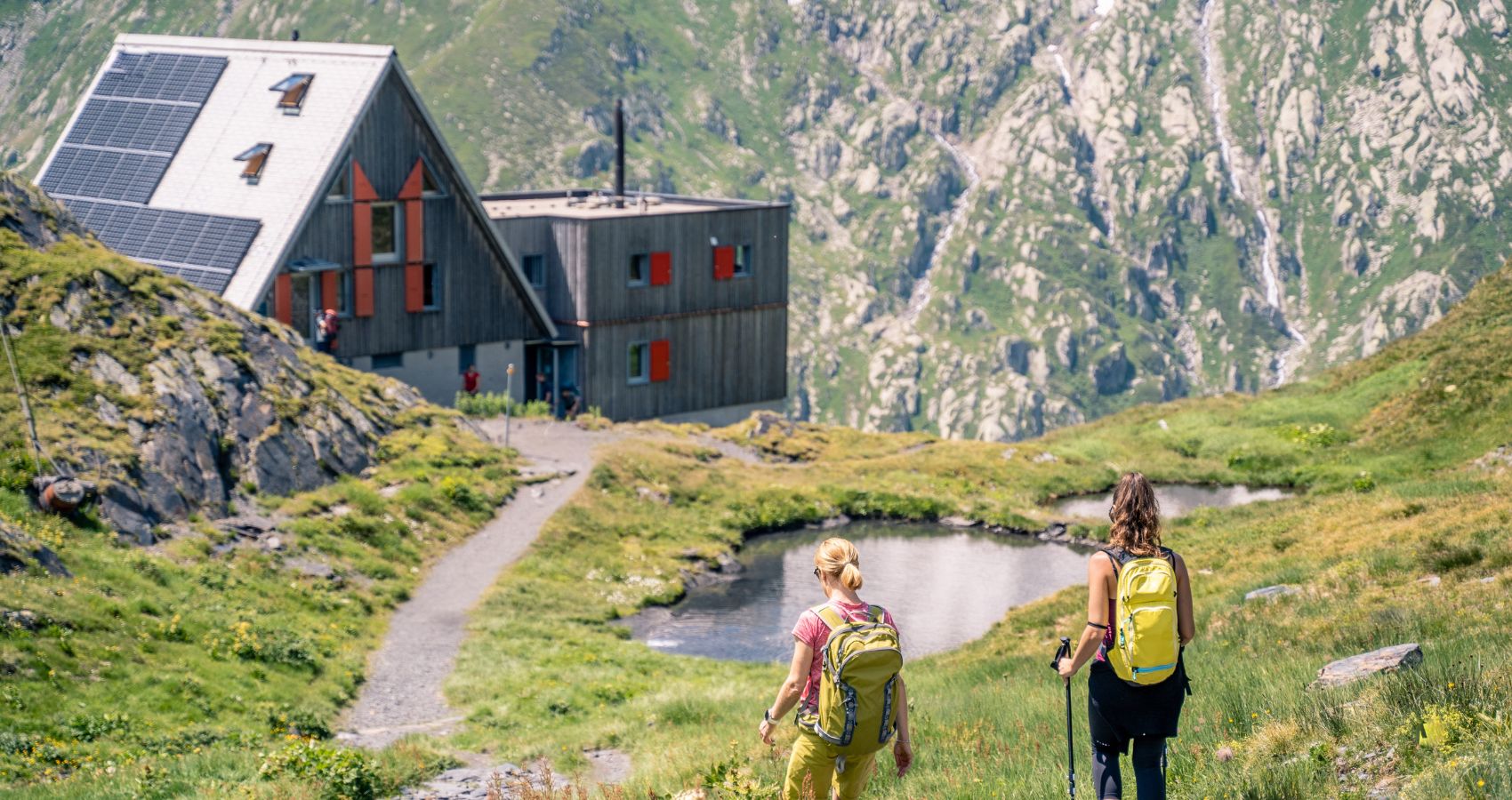
While the growing role of renewable energy sources and energy storage is frequently discussed in the context of national and international energy supply, it is not always immediately clear how these resources can contribute to the transition towards sustainability, including for smaller, more local facilities such as Alpine mountain huts.
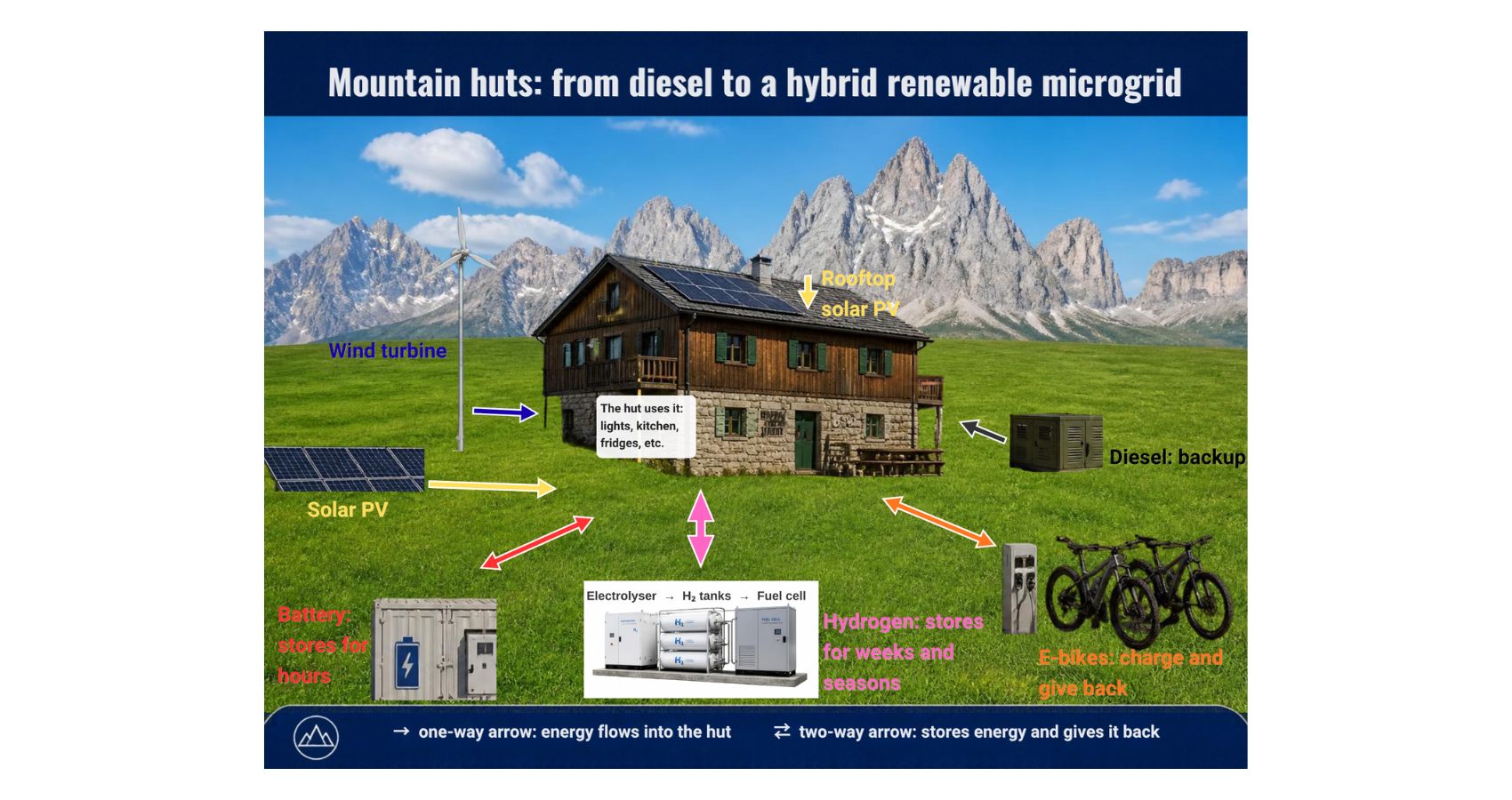
In many cases, these facilities are located in remote areas that are as beautiful as they are fragile and are often not connected to the national electricity grid. As a result, they rely on diesel generators to meet their energy needs. These generators not only produce greenhouse gas emissions during operation but also pose logistical challenges when it comes to transporting fuel to the site. Furthermore, they require regular maintenance and are difficult to scale up as energy demand increases.
The recent growth in tourism to mountain destinations, together with visitors’ rising expectations, is likely to significantly increase electricity, water and heating consumption in many Alpine mountain huts.
It is therefore important to identify more sustainable solutions to meet these needs in the future.
As part of the research project ReNoN: Total Integration of Energy Networks and Prosumers Towards a Decarbonized Energy Infrastructure, funded by the Autonomous Province of Bolzano and carried out in collaboration with colleagues at the Free University of Bozen-Bolzano, the Trento research team has been investigating whether, and to what extent, Alpine mountain huts can harness locally available renewable energy sources to meet their energy needs.
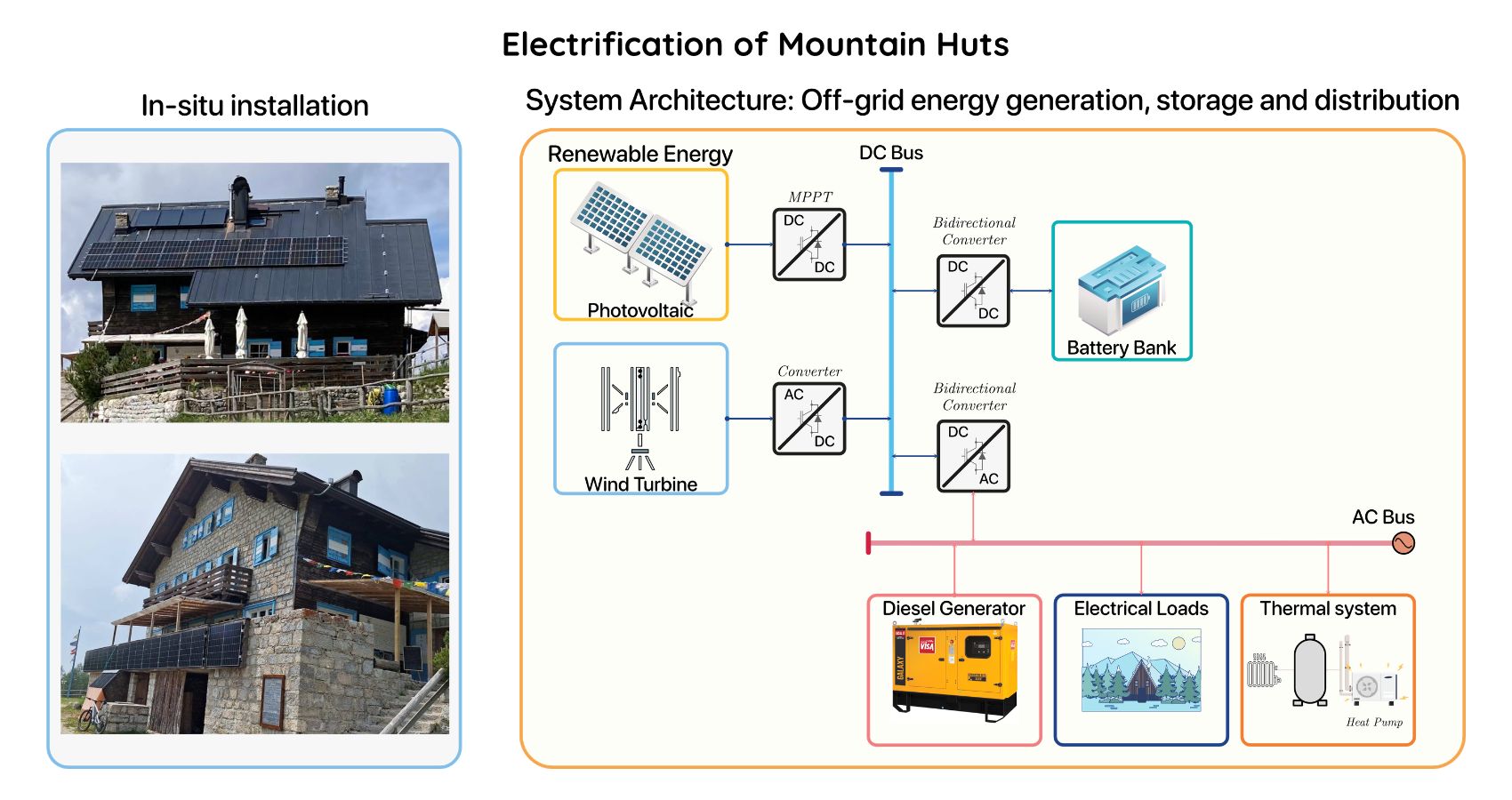
The first phase of the research, conducted through the thesis work of Elisa Bortolotti, a former student of the Mechatronics Engineering programme in Trento, in collaboration with Niccolò Andreetta, a UniTrento alumnus currently pursuing a PhD at the Norwegian University of Science and Technology, examined how integrating photovoltaic panels, small wind turbines, batteries and hydrogen-based energy storage systems could meet part of the energy demand of selected mountain huts in the Trentino region and reduce their CO₂ emissions. The aim was to identify the most appropriate sizing of these resources.
In recent months, thanks to the efforts of two postdoctoral researchers working on the project, the research has continued to progress and expand. The focus now extends beyond the huts’ electricity needs to include their heating requirements, which could be met using modern heat pumps. This involves an integrated approach to energy system design that also takes into account the physical constraints of the existing infrastructure.
While Dr Malik Ali Judge is investigating how to optimally size the various energy resources for specific Alpine mountain huts, thereby contributing to the design phase, his colleague Dr William D. Chicaiza Salazar is focusing on how best to operate these renewable energy sources and storage systems once they have been installed.
Through the use of intelligent control strategies that incorporate weather forecasts and predictions of system performance, the most effective allocation of available resources is determined at each stage to meet energy demand.
The significance of this research is further enhanced by the valuable collaboration established with the Società degli Alpinisti Tridentini (SAT), the Trentino mountaineering association. SAT has supported the research by sharing real-world information and data from mountain huts under its management that have recently undergone energy-efficiency upgrades and the integration of renewable energy sources and battery storage systems.
Ultimately, the project’s goal is to develop algorithms that can guide the installation of renewable energy resources and energy storage systems, ensuring that their capacity is appropriately sized to match the consumption patterns of each Alpine mountain hut. The aim is to strike the right balance between reducing emissions and installation costs, while also optimising the use of these systems throughout the hut’s operational lifetime through an advanced energy management system.
Sources / Further Reading:
Project ReNoN (https://webapps.unitn.it/du/it/Persona/PER0224959/Progetti)