Information magazine of the Department of Industrial Engineering
Università di Trento

In recent years, climate change has been profoundly altering forest and agricultural ecosystems, accelerating desertification processes, soil degradation, and the loss of vegetation cover. In many European regions, particularly in Southern Europe, decreasing rainfall and increasing water stress are making reforestation and the restoration of degraded land increasingly difficult.
Within this context, research carried out as part of the European H2020 ONEforest project focuses on designing sustainable solutions to improve plant growth and water management in agriculture and forestry.
The research activity led to the development of two types of multifunctional materials:
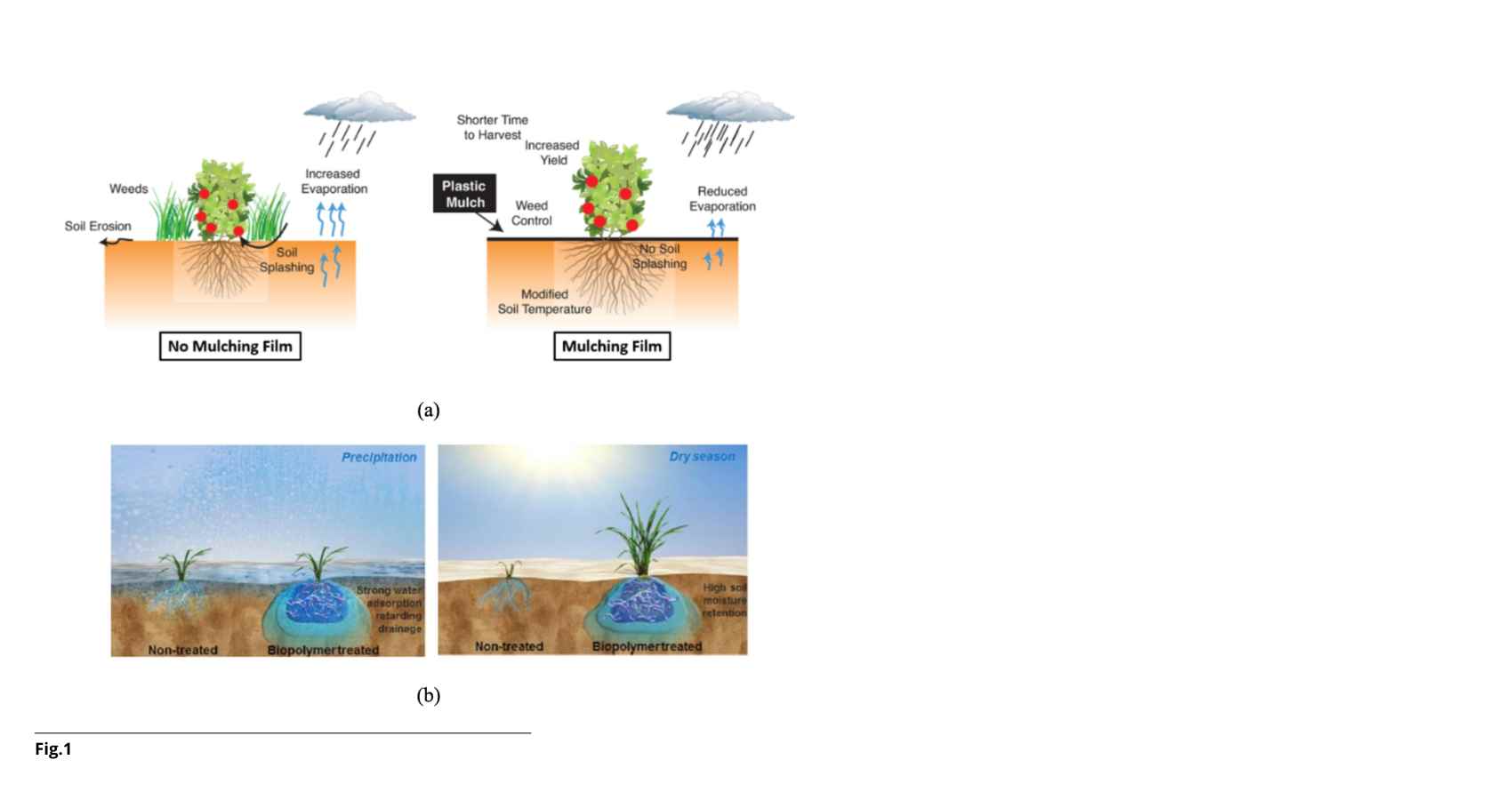
Mulching films are designed to support reforestation and agricultural crops under arid conditions by limiting weed growth and reducing water evaporation from the soil after transplantation (Figure 1a).
Soil amendments, on the other hand, are mixed directly into the soil or planting holes to improve their physical, chemical, and water retention properties (Figure 1b).
Both systems were developed as bio-based composites reinforced with wood fibers, using xanthan gum, a biodegradable polysaccharide derived from natural sources, as the matrix.
The primary objective of the research was to identify a viable alternative to the synthetic products commonly used today, which are often responsible for the release of microplastics into the soil.
The combination of xanthan gum—characterized by a high water absorption capacity—and natural fibers with high water retention capability enabled the development of materials capable of significantly improving soil moisture management and reducing irrigation requirements.
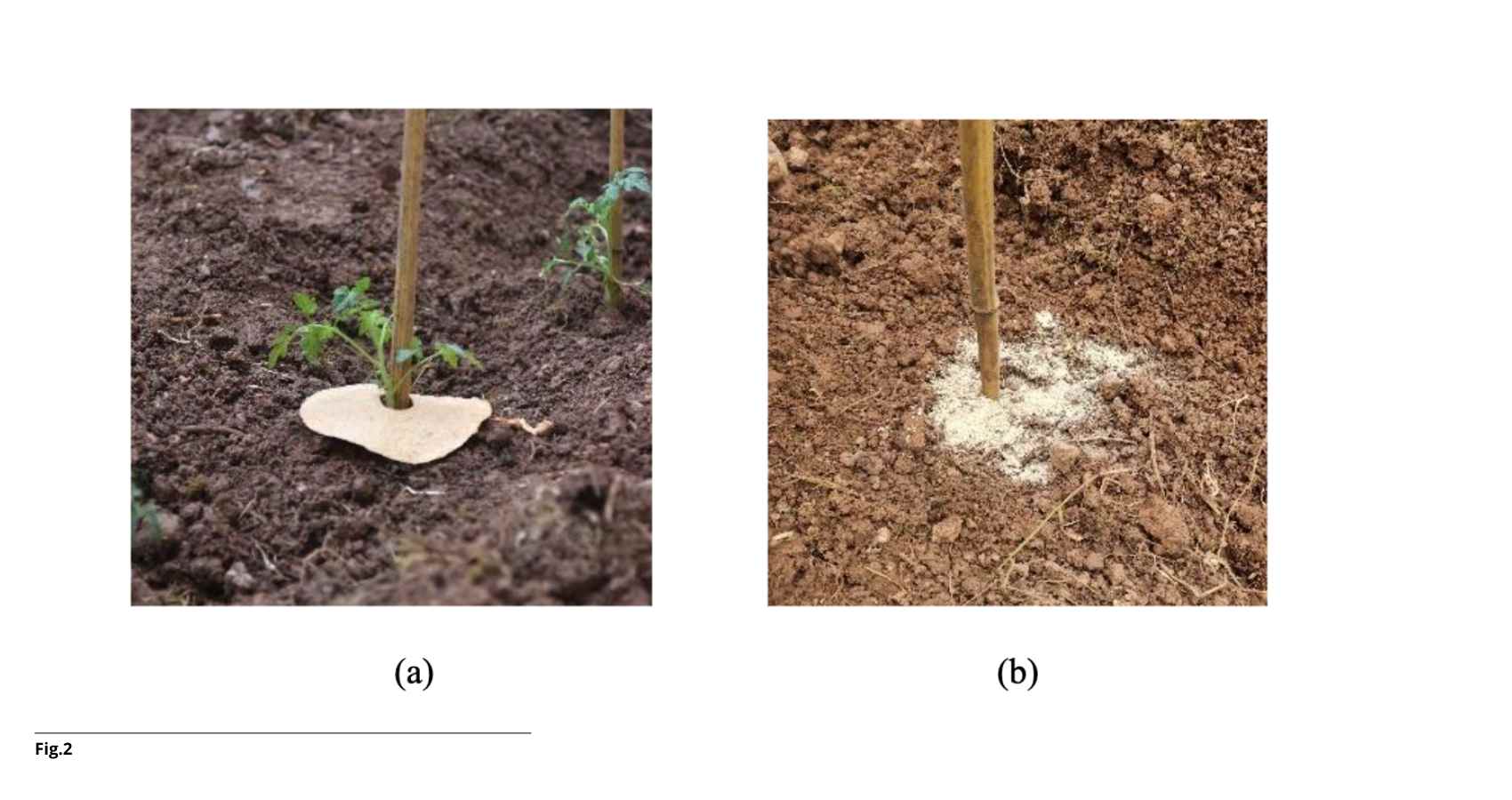
For the mulching films (Figure 2a), several formulations were developed through crosslinking processes using citric acid, sodium trimetaphosphate, and tannic acid. Samples crosslinked with citric acid exhibited the best performance, with water absorption capacities exceeding 500% of their initial weight and high stability even after repeated absorption and drying cycles.
From a mechanical perspective, the materials showed greater puncture resistance than commercial polypropylene films, effectively simulating resistance to weed growth. Furthermore, despite the presence of wood fibers, the samples demonstrated non-flammable behavior due to the ability of xanthan gum to form a protective char layer.
Field trials conducted on young plants revealed better plant health compared with that obtained using conventional commercial products.
Regarding soil amendments, granular formulations (<2 mm) were developed by combining xanthan gum with different types of cellulose (Figure 2b).
Tests showed that adding less than 2% by weight of amendment is sufficient to increase the soil water absorption capacity by up to 69%. Water retention curves also demonstrated a significant increase in the amount of water actually available to plants.
Experiments conducted on grasses confirmed improved soil water regulation and a higher probability of plant survival under drought conditions. In parallel, tests on tomato crops showed yield increases of up to 33% in soils rich in organic matter.
The research was complemented by a Life Cycle Assessment (LCA), which highlighted the low environmental impact associated with the production of the developed materials.
From an economic perspective, the results are also promising: preliminary estimates indicate production costs comparable to those of biodegradable commercial products currently available on the market.
Overall, the study demonstrates the potential of xanthan gum-based bio-composites as sustainable, cost-effective, and scalable solutions for forestry and agricultural applications, contributing to the development of technologies capable of improving ecosystem resilience in a context of increasing climate stress.
Figure 1. (a) Diagram of the possible effects of mulching films on a common agricultural cultivation system. (b) Diagram of the operating principle of biopolymer-based soil amendments: water absorption during precipitation and water retention during periods of drought.
Figure 2. (a) Image of a mulching film based on xanthan gum and wood fibers applied to a tomato plant; (b) image of a soil amendment consisting of xanthan gum and cellulose fibers applied to the soil in the planting hole.