Information magazine of the Department of Industrial Engineering
Università di Trento
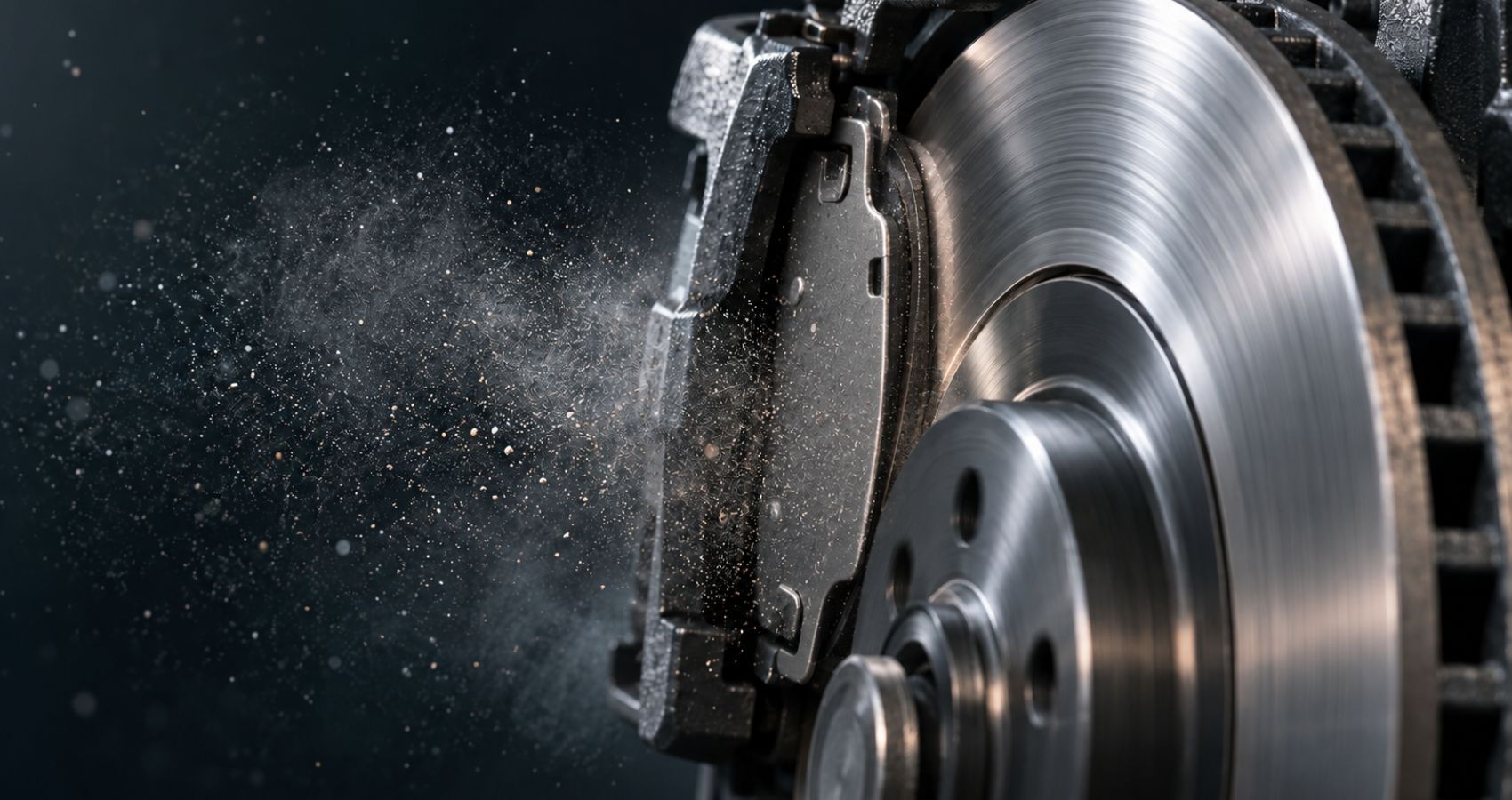
During braking, friction between the brake disc and pads slows the vehicle by converting kinetic energy into heat. This sliding contact also causes wear and can generate vibrations, noise and fine particle emissions, contributing to the environmental impact of road traffic.
The issue also concerns electric vehicles. Regenerative braking reduces the use of conventional friction brakes, but does not eliminate the need for them. Understanding how particles are generated and released can therefore help guide the development of braking systems designed to produce lower particulate emissions.
This was the focus of the present research, carried out in collaboration with Brembo N.V. The study investigated the relationships between friction, dynamic behaviour and particle emissions. The main objective was to determine how system stiffness, boundary conditions and vibrations affect the contact between the disc and pad and, consequently, particle release, without changing the materials used.
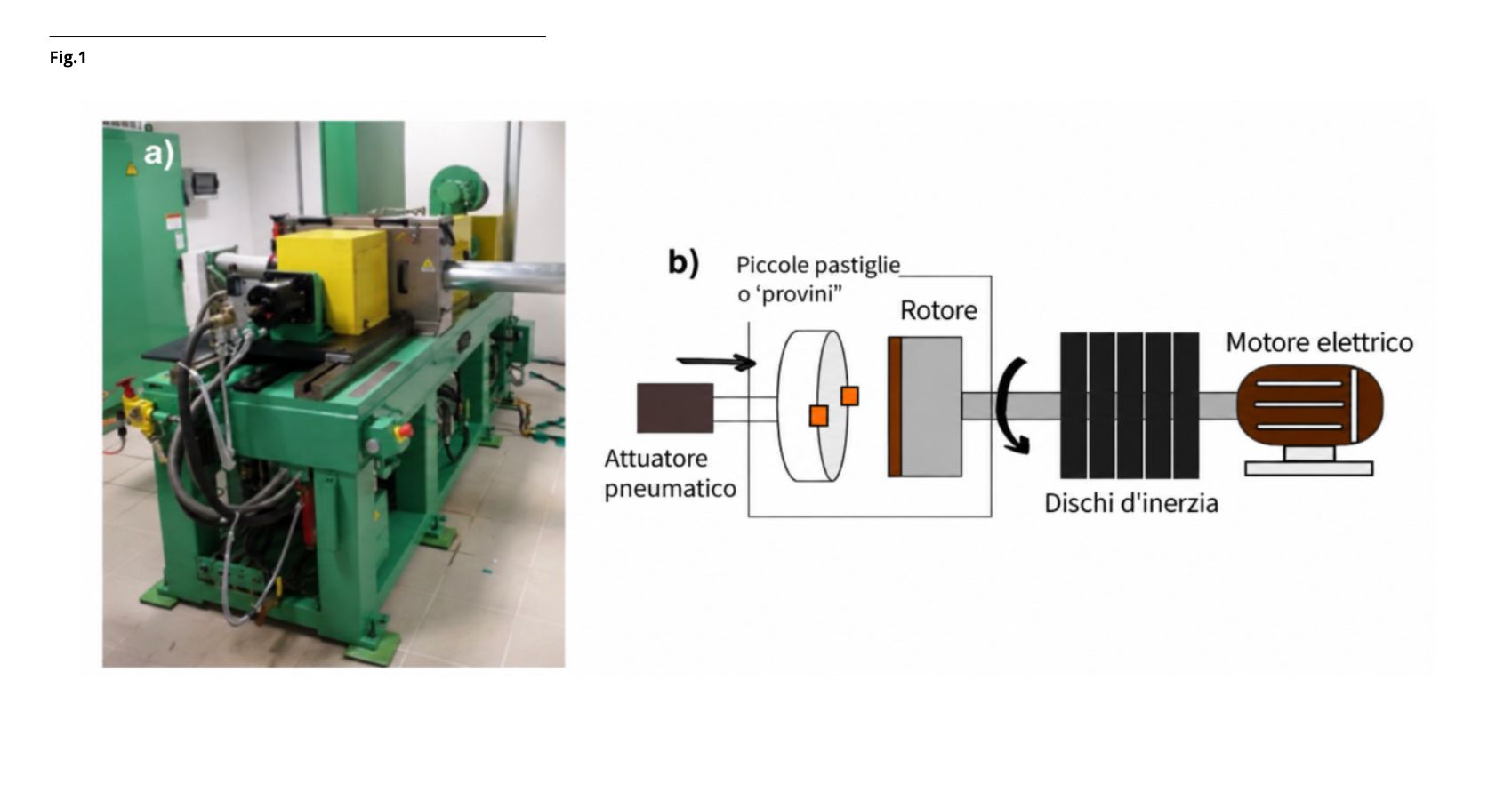
The experimental campaign was conducted using a reduced-scale inertial dynamometer, a laboratory test rig capable of reproducing braking events under controlled pressure, speed and temperature conditions. The system uses a reduced-size disc and friction-material samples, following similarity criteria that make it possible to relate laboratory tests to the braking behaviour of a real vehicle.
This approach makes it possible to evaluate materials and design solutions during the early stages of development, before moving on to testing complete braking systems. Accelerometers, a microphone and an optical particle counter were used to simultaneously measure vibrations, noise and the number concentration of particles present in the air.
The results obtained under controlled operating conditions first highlighted the importance of considering transient phases and emission peaks when interpreting experimental measurements.
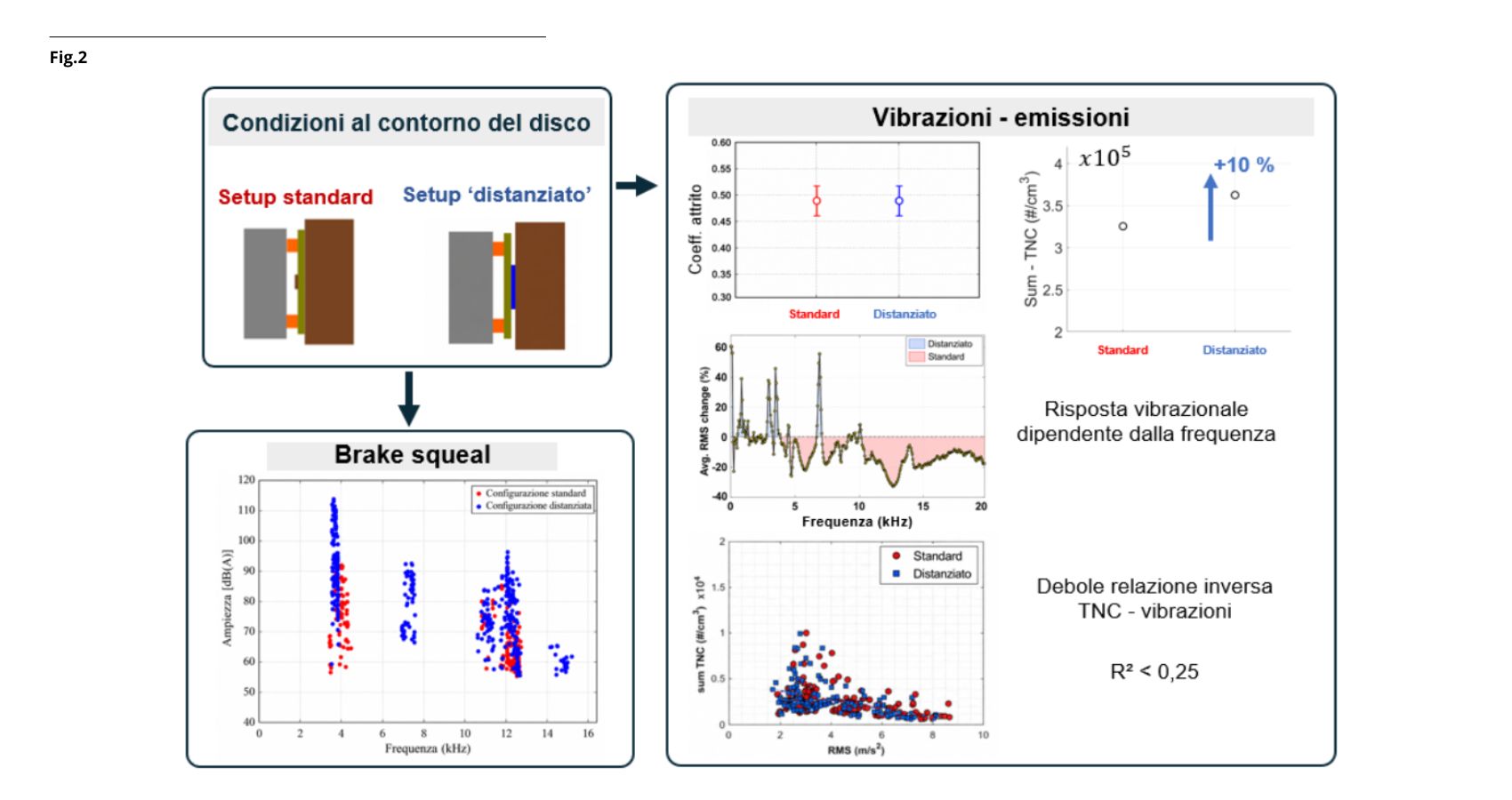
The tests, conducted by adapting the SAE J2521 industrial procedure, showed variations in sound levels and the appearance of additional frequencies associated with brake squeal, the characteristic high-pitched and tonal noise produced by brakes. The connections between the components of the braking system affect its overall stiffness and, significantly, its acoustic behaviour.
The effects of the same modification were also investigated through an experimental programme combining friction and wear-surface analysis with simultaneous measurements of vibrations and particle emissions. Under the conditions examined, the less stiff configuration produced an average particle number concentration approximately 10% higher than the stiffer configuration, despite similar friction coefficients and comparable surface coverage by secondary contact plateaus. These plateaus form when wear debris becomes compacted on the surface of the brake pads during braking.
Although the less stiff configuration exhibited a lower overall vibration level, it showed greater amplitudes in specific low-frequency bands. The results therefore suggest that correctly interpreting particle emissions requires more than simply considering overall vibration intensity: the frequency content of the vibrations must also be taken into account.
More intense low-frequency vibrations could locally modify contact pressure and microslip phenomena. This may promote the temporary breakdown and subsequent renewal of the tribological layer, facilitating particle detachment. A reduction in high-frequency vibration components could also contribute to increased emissions, although its role has not yet been fully clarified.
Another hypothesis concerns the amplitude of the oscillations. Moderate vibrations could promote the compaction and stabilisation of the friction layer, whereas larger amplitudes could facilitate its disruption. These interpretations, however, require further investigation. Analysis of individual braking events showed only a weak, and generally inverse, relationship between vibration amplitude and particle concentration.
Further controlled experiments will therefore be necessary to distinguish the effects of vibration frequency and amplitude from those caused by contact pressure, temperature and braking history.
Understanding these mechanisms is nevertheless essential for designing quieter braking systems capable of reducing particulate emissions without compromising braking performance or safety.
Figure 1. Reduced-scale inertial dynamometer used in the study: (a) experimental test bench; (b) simplified schematic of the main system components.
Figure 2. Effect of the disc boundary conditions on vibrations, brake squeal and particulate emissions in the reduced-scale inertial dynamometer.