Information magazine of the Department of Industrial Engineering
Università di Trento
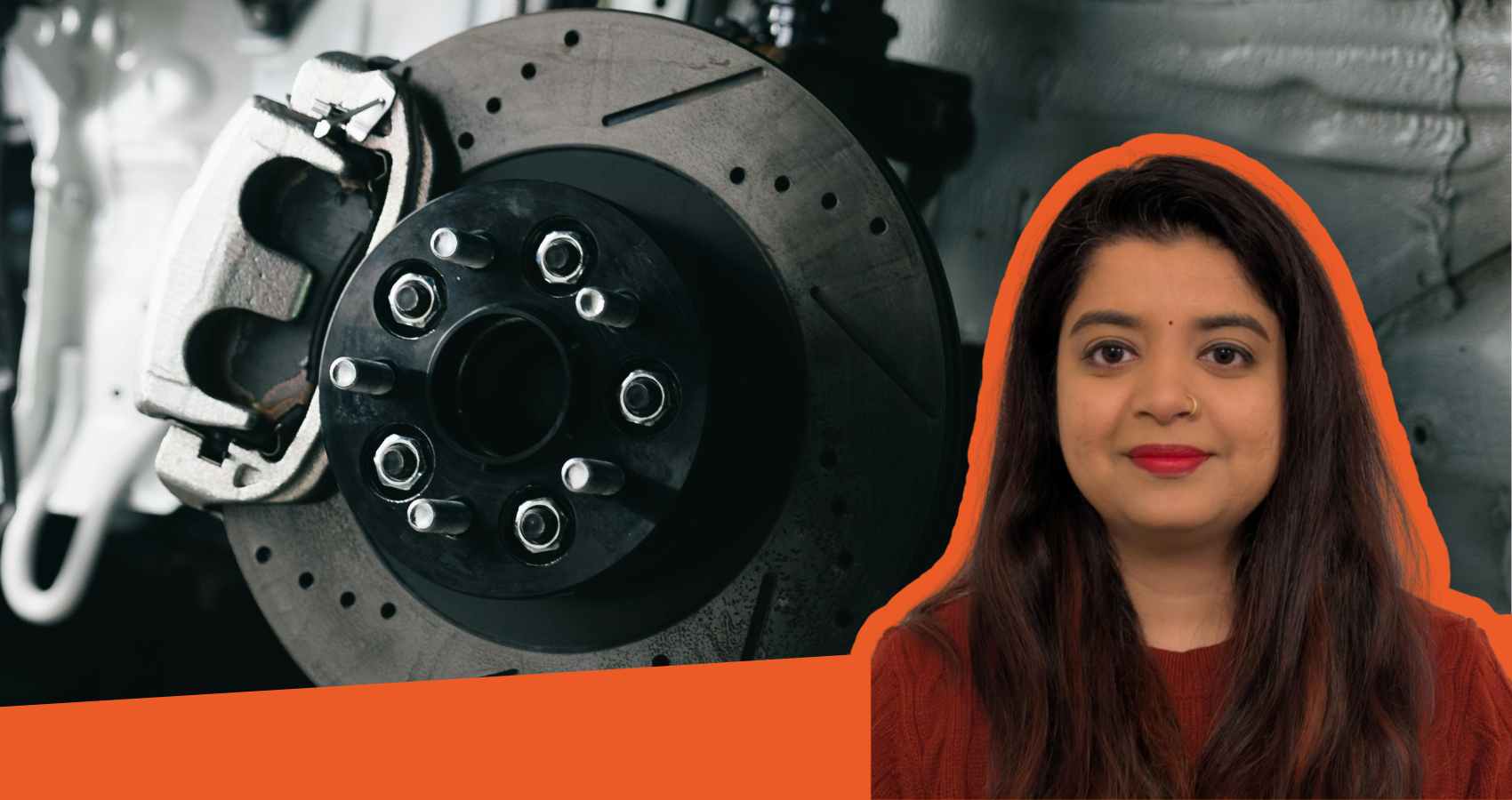
We are proud to feature a truly global story of academic excellence and professional success. Originally from India, our guest pursued her engineering studies in the United States before choosing the University of Trento for her PhD in Materials, Mechatronics, and Systems Engineering.
During her time at our Department of Industrial Engineering (DII), she focused her research on the tribological behaviour of high-performance braking systems (a niche where materials science meets mechanical precision). After several years of dedicated research, she has now transitioned to a key role in the automotive industry in the UK, working for Jaguar Land Rover (JLR). Today, she bridges the gap between theoretical tribology and the future of automotive safety. We sat down with her to discuss her journey from Trento to the vanguard of British engineering.
You’ve studied and worked in India, the US, Italy. What brought you to Trento? How has this international journey shaped your professional identity?
What brought me to Trento was the opportunity to deepen my expertise in automotive engineering within a research environment that values innovation and sustainability. After gaining experience in India and the US, I wanted to be part of a program that combines strong academic rigor with practical industry collaboration. Trento stood out because of its focus on advanced mobility solutions and its reputation for fostering interdisciplinary research, something that aligns perfectly with my interest in braking systems and friction materials, which are critical for vehicle safety and performance.
My international journey has shaped me in profound ways. In India, I built a strong technical foundation and learned to be resourceful in solving complex engineering challenges. My experience in the US exposed me to cutting-edge technologies and a culture of innovation, where I learned to approach problems with a data-driven mindset and embrace collaboration across disciplines. Italy gave me a unique perspective on design thinking and the integration of performance with sustainability (especially relevant in the automotive sector where environmental impact is a growing concern).
These experiences have moulded me into a professional who thrives in multicultural environments and approaches engineering challenges with a global outlook. I’ve learned that developing braking systems isn’t just about technical precision, it’s about understanding diverse regulatory standards, customer expectations, and sustainability goals across markets. This global exposure has made me adaptable, collaborative, and committed to delivering solutions that balance safety, performance, and environmental responsibility.
Your PhD focused on the tribology of braking systems. How do you apply those specific scientific insights to your current work on high-performance vehicles?
My PhD research focused on the tribology of braking systems (understanding friction, wear mechanisms, and material interactions under different operating conditions). This gave me a deep understanding of how microscopic surface phenomena influence macroscopic performance like stopping distance, noise, and durability.
At JLR, I apply these insights every day when working on high-performance braking systems. For example, when selecting friction materials for luxury or performance vehicles, I consider not just coefficient of friction but also thermal stability, wear rates, and how surface chemistry evolves under repeated braking. My research background helps me interpret test data more effectively and predict how a material will behave in real-world conditions, which is critical for ensuring safety and comfort.
Additionally, the tribological principles I studied guide my approach to tackling NVH issues and optimizing brake feel (areas where surface interactions and material properties play a huge role). In short, my PhD taught me to look beyond the numbers and understand the science behind them, which allows me to deliver braking solutions that meet JLR’s high standards for performance and refinement.
Looking back, what are the most valuable skills or lessons you gained during your PhD at our Department of Industrial Engineering?
Looking back, my PhD at the Department of Industrial Engineering was transformative in many ways. On the academic side, I gained deep expertise in tribology and advanced material characterization, which taught me how microscopic interactions influence braking performance (knowledge I apply daily in my current role). I also developed strong research skills: designing experiments, analysing complex data, and approaching problems with scientific rigor.
But beyond academics, the experience shaped me personally. Living in Trento gave me the chance to work in a truly international environment, which taught me adaptability and cross-cultural communication. I built friendships with people from all over the world, and those relationships enriched my perspective on collaboration and teamwork. Traveling across Italy and Europe during my PhD was equally valuable ,it taught me to appreciate diversity, creativity, and the importance of balance between work and life.
These experiences made me not only a better engineer but also a more well-rounded professional who values innovation, cultural sensitivity, and human connections. Trento wasn’t just about research; it was about growing as a person and learning how to thrive in a global context.
What is your main advice for PhD students at DII who are looking to transition from academic research to a career in a leading global company?
My main advice for PhD students looking to move from academia to a global company is to focus on three things: adaptability, communication, and understanding the bigger picture.
First, be prepared to shift your mindset from deep theoretical research to practical, time-sensitive problem-solving. In industry, decisions often need to be made quickly, and solutions must balance technical excellence with cost, manufacturability, and customer experience.
Second, learn to communicate your research in a way that non-specialists can understand. In a company like JLR, you’ll work with cross-functional teams (designers, manufacturing engineers, project managers) so being able to explain complex ideas simply is a huge advantage.
Finally, build your network and stay curious about how your expertise fits into the broader product development process. During my transition, I realized that my tribology knowledge was most valuable when I could connect it to performance, sustainability, and customer comfort.
In short: keep your scientific rigor, but pair it with flexibility, collaboration, and a willingness to learn beyond your niche. That’s what makes you stand out in a global company.
With the shift toward electric vehicles and new emission standards, what do you see as the next big challenge for materials engineering in the automotive sector?
The shift toward electric vehicles and stricter emission standards is fundamentally changing braking systems, and with that, materials engineering faces new challenges. One major issue is brake wear emissions (particles from friction materials are becoming a significant source of non-exhaust emissions). As regulations tighten, we need materials that minimize particulate generation without compromising safety or performance.
Another challenge is thermal management. EVs rely heavily on regenerative braking, which means friction brakes are used less frequently but under more extreme conditions when they do engage. This creates unique requirements for materials that can handle corrosion from long idle periods and sudden high-energy stops.
Finally, sustainability is key. We need to move toward eco-friendly friction materials, reducing copper and other harmful elements, while ensuring durability and comfort. The next big step will be developing advanced composites and coatings that balance low emissions, high thermal stability, and recyclability.
For example, JLR and other OEMs are already working on copper-free friction materials and low-emission brake pads to meet upcoming Euro 7 standards. There’s also a push toward integrating surface treatments and advanced binders to reduce particulate emissions without sacrificing brake feel.
Looking ahead 5–10 years, I see braking systems evolving into smart, sensor-integrated components that monitor wear, temperature, and emissions in real time. Materials will not only need to be cleaner and more durable but also compatible with digital monitoring and predictive maintenance. This convergence of materials science and smart technology will redefine braking: from a passive safety component to an active, intelligent system that supports sustainability and performance.