Information magazine of the Department of Industrial Engineering
Università di Trento
The Department of Industrial Engineering (DII) is involved in several bilateral projects aimed at strengthening the internationalisation of teaching and research. These include DefHent – Defects Engineering in High Entropy Electrolytes for Solid-State Batteries, a project funded by the Italian Ministry of Foreign Affairs and International Cooperation (MAECI) and carried out in collaboration with the Indian Institute of Technology Delhi (IIT Delhi).
The DII team includes Professors Mattia Biesuz and Gian D. Sorarù, working alongside Indian partners from the Department of Materials Science and Engineering (DMSE).
DefHent aims to develop new solid electrolytes for lithium-ion batteries by applying the concept of high entropy. Replacing liquid electrolytes with solid materials is one of the most promising approaches to making batteries safer and improving their performance.
High-entropy ceramics are a relatively recent class of materials. Their development began in 2015 with simple rock-salt-structured oxide systems and has since expanded to numerous families of compounds: from ultra-high-temperature ceramics, such as nitrides, borides and carbides, to thermoelectric materials, oxygen-ion conductors and proton-conducting electrolytes.
The project is part of the Department’s broader research activities on high-entropy materials, which also involve Professor Vincenzo Sglavo through two PRIN research projects.
The concept of high entropy is based on the formation of solid solutions containing at least five elements occupying the same site in the crystal lattice, generally the cation site. The presence of multiple elements increases the configurational entropy of the system, making it possible to obtain structures and properties that are difficult to achieve through conventional compositions.
One of the most interesting aspects of this approach is the opportunity to design new materials by exploring an exceptionally broad compositional space. By varying the elements and their concentrations, researchers can generate new crystalline phases and tailor structural, thermal, mechanical and electrochemical properties.
High entropy therefore represents a frontier in materials science, offering significant opportunities while also requiring new tools to navigate the vast number of possible combinations.
Alongside the experimental development of new materials, research is advancing sophisticated thermodynamic models to predict the stability of different crystalline phases. Integrating experimental and computational expertise is therefore essential.
The IIT Delhi team includes Professors A. Sarkar and N.S. Harsha Gunda. Professor Sarkar focuses primarily on the electrochemical properties of materials, while Professor Gunda uses methods based on density functional theory (DFT) and machine learning to develop new materials and predict their thermodynamic and transport properties from first principles. Other DMSE researchers, including Professor J. Jain, are also involved in the collaboration.
This combination of expertise makes it possible to approach electrolyte development from complementary perspectives: the synthesis and experimental characterisation of materials, the understanding of the phenomena governing their performance, and the prediction of the most promising compositions.
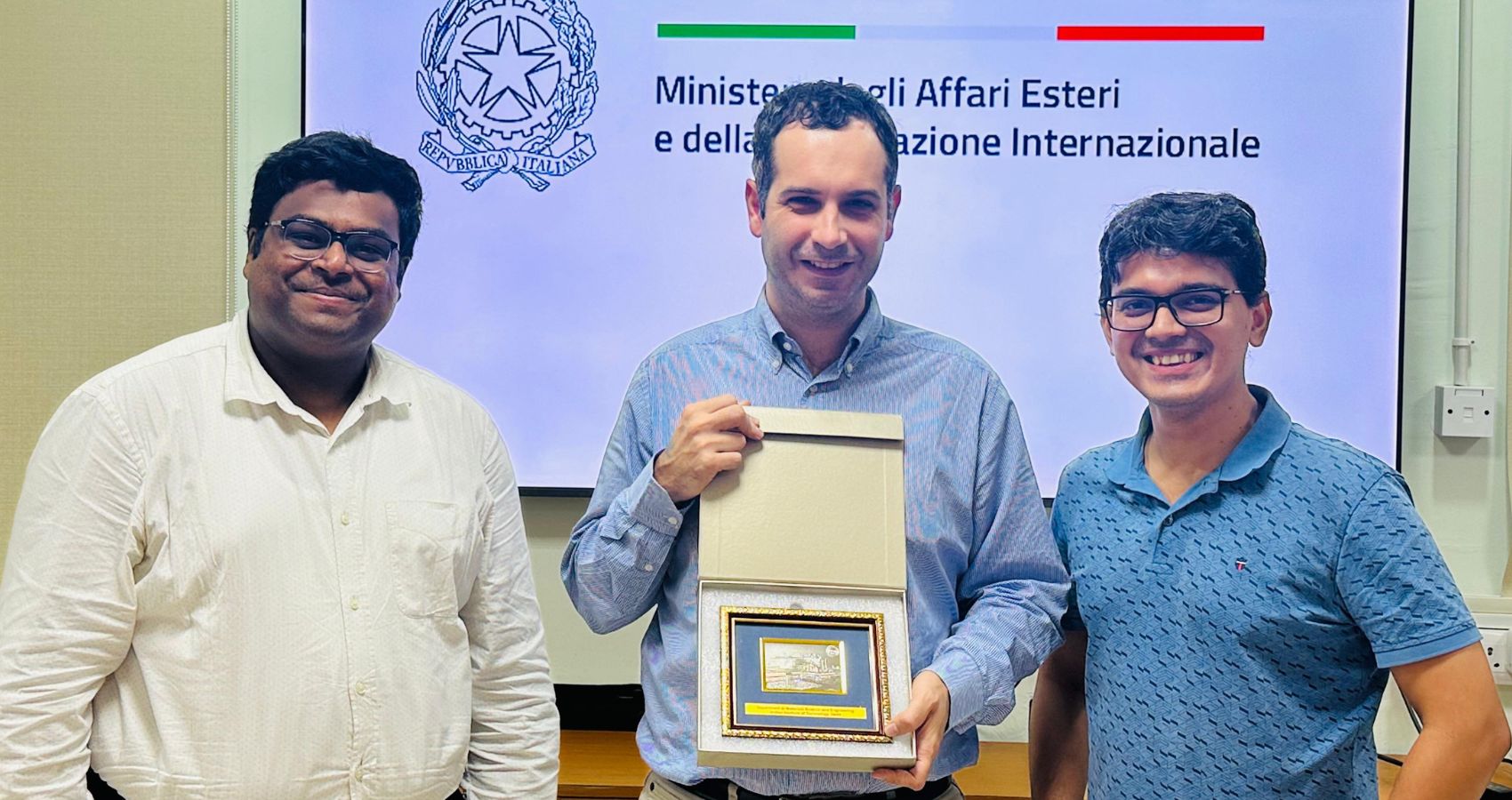
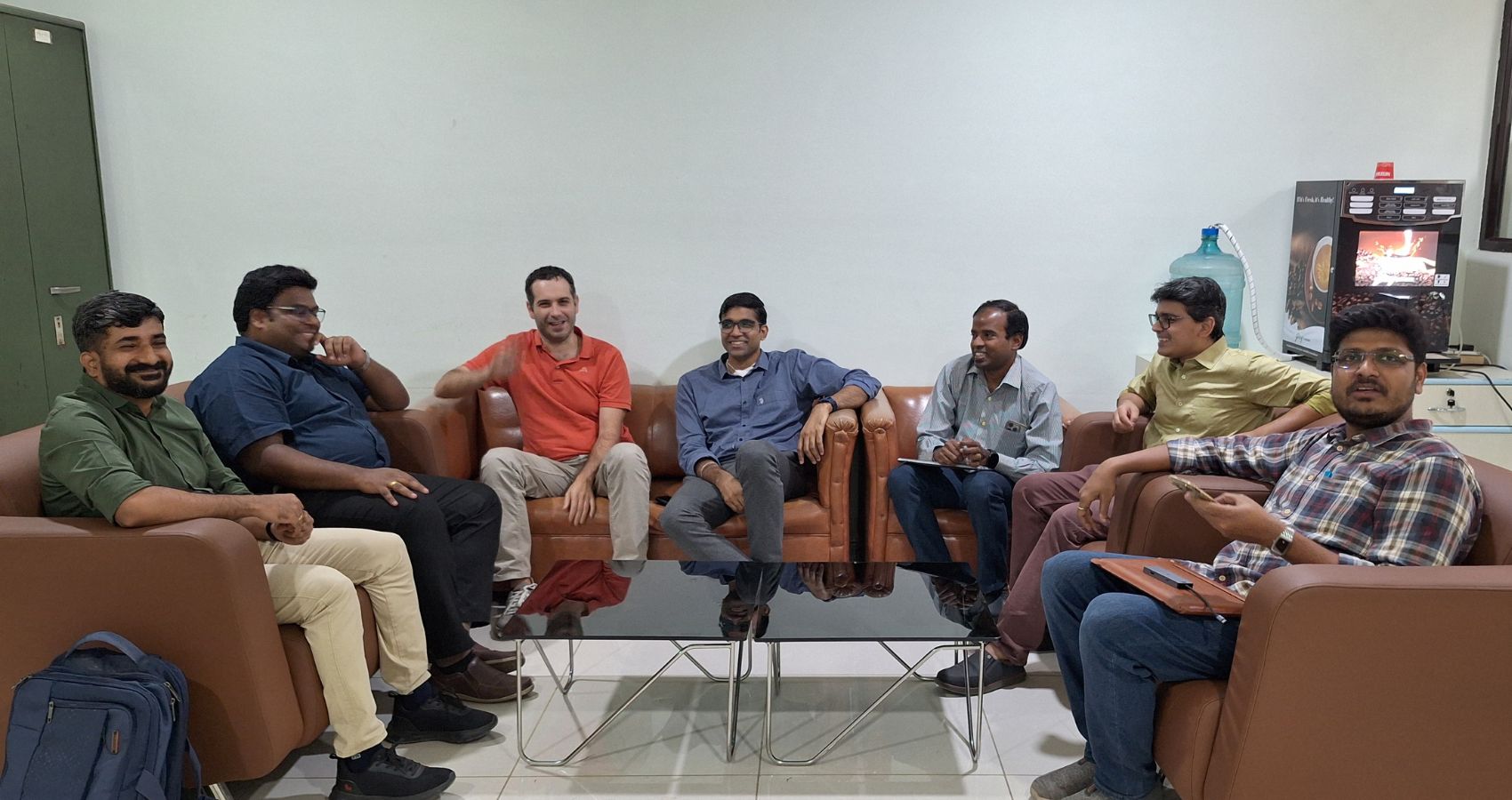
Two visits by Professor Biesuz to IIT Delhi have already taken place during the project, followed by a visit to Trento by the Indian partners in May 2026. On that occasion, a Memorandum of Understanding was signed between the two departments to strengthen cooperation in research and education. A possible extension of the agreement to university-wide level is also under consideration.
IIT Delhi is an internationally recognised institution of excellence. In addition to its research on advanced ceramics, its Department of Materials Science and Engineering offers opportunities for collaboration across numerous fields of materials science and engineering.
The Institute is also developing new facilities for the characterisation of high-temperature materials, intended for applications ranging from aerospace to defence. These emerging capabilities and infrastructures could create further opportunities for collaboration with DII, strengthening a strategic partnership built on the exchange of knowledge, researchers and students.