Information magazine of the Department of Industrial Engineering
Università di Trento
Gravitational waves represent one of the most important revolutions in modern astrophysics. Predicted by Einstein’s theory of General Relativity, they are perturbations of spacetime generated by some of the most energetic phenomena in the Universe, such as the merger of black holes and neutron stars. Their first direct observation, achieved in 2015 thanks to the ground-based LIGO interferometers, ushered in a new era of astronomy, making it possible to study the Universe through an observational channel complementary to electromagnetic radiation.
At low frequencies, however, ground-based detectors are limited by seismic noise and other environmental disturbances. Extending the observable frequency band therefore requires placing the instruments in space. This is the motivation behind LISA (Laser Interferometer Space Antenna), a mission led by the European Space Agency (ESA) with the goal of creating the first space-based observatory for gravitational waves.
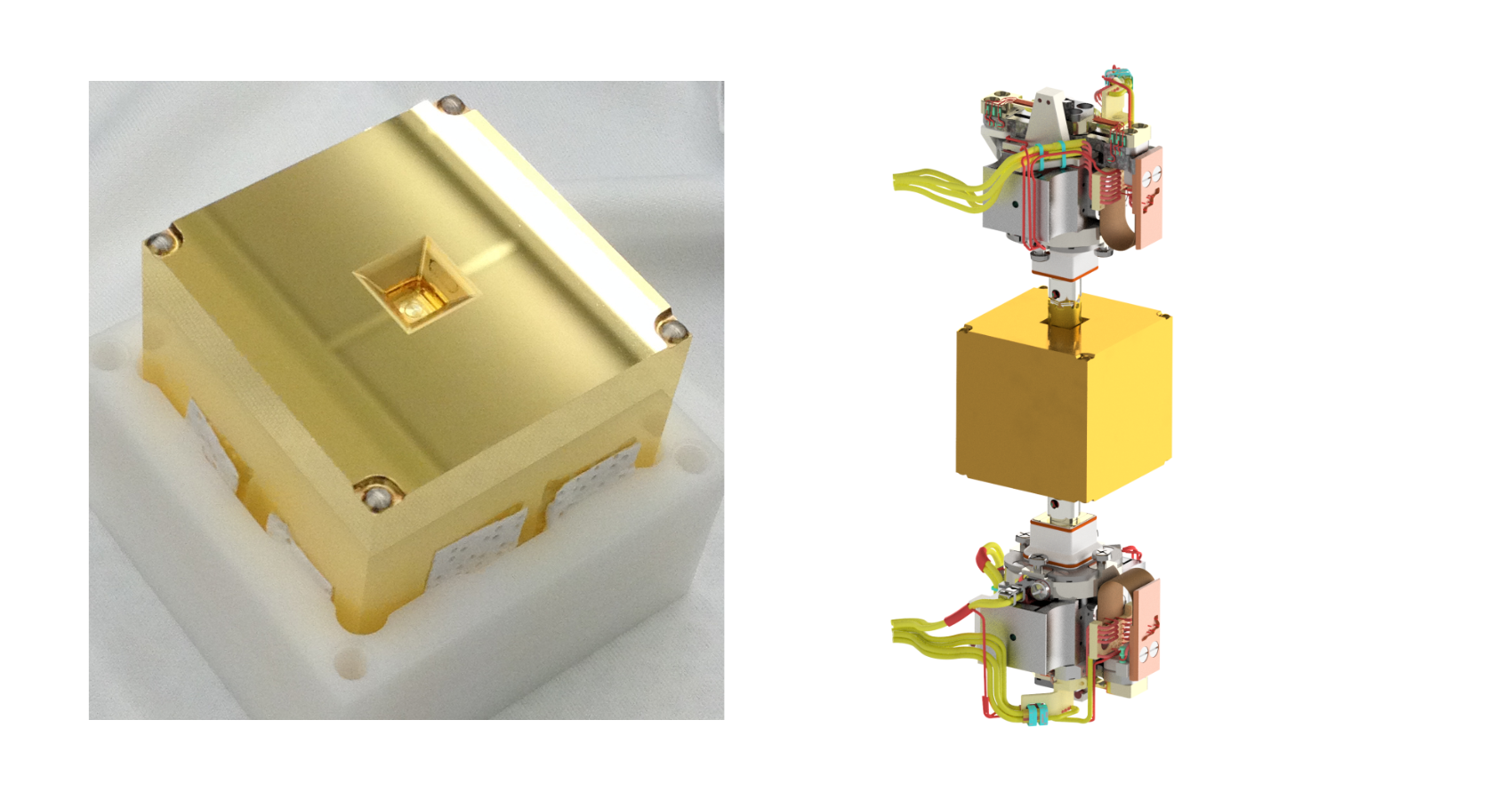
LISA will consist of three satellites arranged at the vertices of an equilateral triangle with sides approximately 2.5 million kilometres long. A laser interferometer will measure extremely small variations in the relative distance between freely falling test masses (TM).
Achieving the performance required by the mission calls for the development of innovative technologies, many of which have already been validated by LISA Pathfinder (LPF), the technology demonstration mission that preceded LISA. Among the most critical subsystems of the Gravitational Reference System (GRS) are the test-mass caging and release mechanisms. These mechanisms must hold the test mass securely during launch and release it once in orbit with an extremely low residual velocity, on the order of micrometres per second.
This delicate operation is entrusted to the Grabbing, Positioning and Release Mechanism (GPRM), a precision mechanism designed to grasp, reposition and ultimately release the test mass.
During the LISA Pathfinder mission, however, residual velocities significantly higher than predicted were observed, indicating non-nominal behaviour of the mechanism. Subsequent experimental campaigns, conducted both in flight and on the ground, showed that these anomalies could be traced back to imperfections in the dynamics of the GPRM. These imperfections reduced the gap between the mechanism’s end-effector and the test mass during release, causing unwanted impacts and the consequent transfer of momentum to the test mass.
This research project is part of the development programme for the new GPRM for LISA, carried out by OHB Italia based on the technological heritage of LISA Pathfinder and the transfer of know-how from RUAG Space, now Beyond Gravity. The main objective was to understand the causes of the anomalies observed during LPF, develop predictive analysis tools and contribute to defining the new mechanism design.
The first stage of the research focused on developing dynamic models capable of describing the behaviour of the GPRM during the grabbing, positioning and release operations. The models were developed to explain the non-nominal phenomena that emerged during LISA Pathfinder and to identify the physical mechanisms responsible for the degradation in performance.
The models were validated through an extensive experimental campaign conducted on the Engineering Qualification Model (EQM) of the mechanism used in LPF. This made it possible to establish a quantitative correlation between the simulations and the experimental results.
Based on the knowledge acquired, an analysis and design activity was then launched to identify modifications to the GPRM capable of improving its dynamic behaviour and making the release more robust against unavoidable manufacturing and operational variations.
The proposed solutions were implemented and verified through a test campaign on the Breadboard Model (BBM). The experimental results confirmed the improved performance of the new design and contributed to defining the reference configuration of the mechanism intended for LISA.
Alongside the development of the GPRM, the research addressed one of the most critical aspects of the entire process: the evolution of the gap between the end-effector and the test mass during the different operational phases. Maintaining an adequate distance between the two surfaces is essential to prevent impacts and ensure a release that complies with the mission requirements.
For this purpose, a simplified analytical model was developed to describe the evolution of the gap as a function of the main design parameters. The model takes into account the nominal and non-nominal displacements of the system, structural vibrations, dimensional tolerances and alignment errors. It therefore makes it possible to quantitatively predict the distance between the test mass and the end-effector throughout all phases of the release.
On the one hand, this tool made it possible to explain the main causes of the out-of-specification releases observed during LISA Pathfinder; on the other, it enabled the rapid assessment of the effectiveness of the design modifications proposed for LISA, becoming an important aid to design decisions.
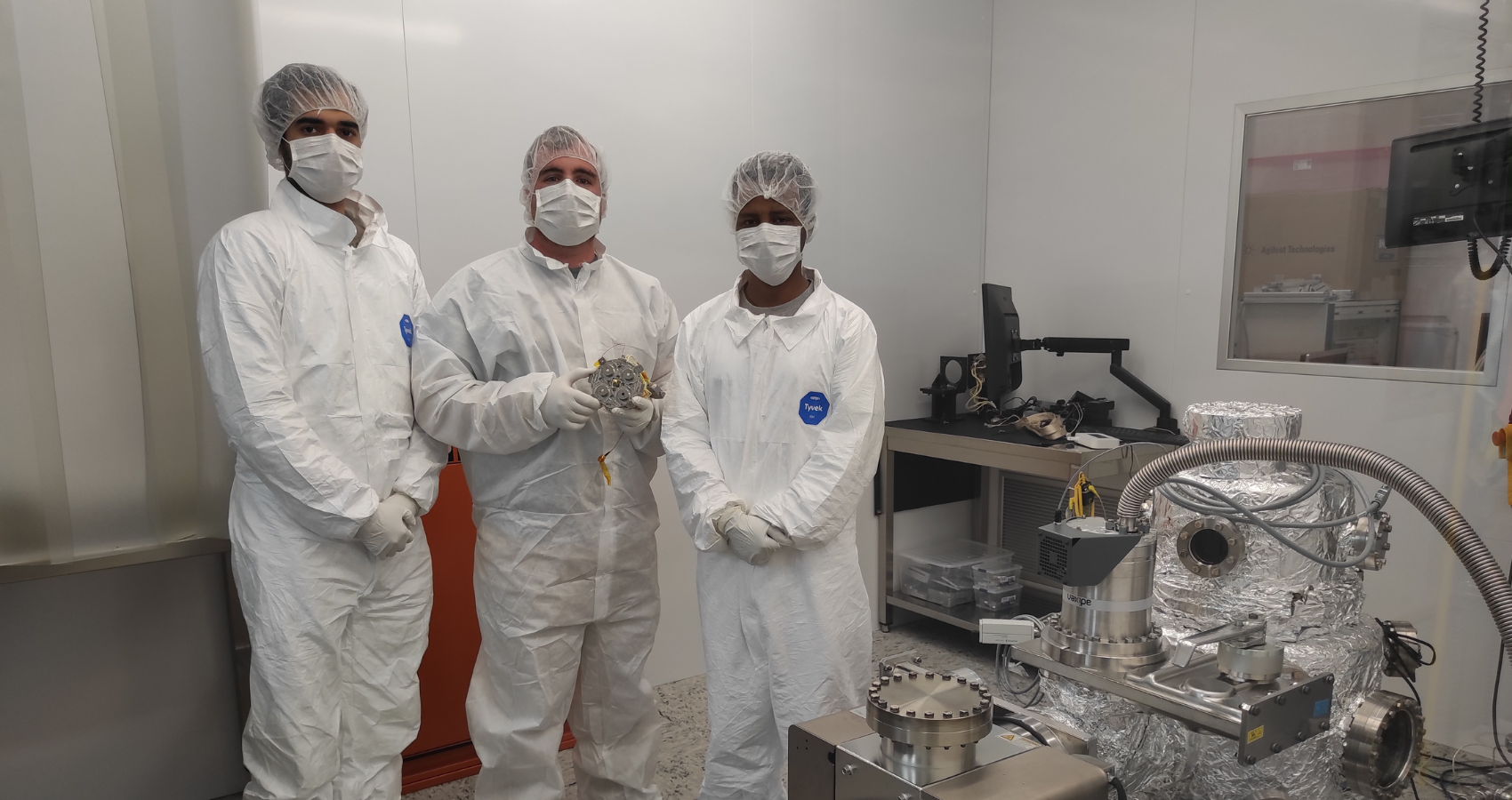
The final part of the PhD research was devoted to the design of a new experimental facility to verify the performance of the GPRM intended for the LISA mission. The facility was conceived to characterise the mechanism’s nominal release under conditions representative of the mission, verify compliance with the requirements concerning the residual velocity of the test mass, and support future system qualification campaigns.
Overall, the work contributed to the development of the new GPRM for LISA by integrating modelling, experimentation, mechanical design and the definition of test methodologies. The models made it possible to understand the physical causes of the anomalies observed during LISA Pathfinder, while the experimental campaigns enabled the adopted solutions to be validated and the new mechanism configuration to be consolidated.
Finally, the analytical tools and test facility developed constitute essential support for verifying GPRM performance during the subsequent stages of the mission: a crucial step towards enabling LISA to listen, from space, to the deepest signals of the Universe.