Information magazine of the Department of Industrial Engineering
Università di Trento

The National Institute for Nuclear Physics (INFN) is not only dedicated to discovering new particles or unveiling the mysteries of the universe. For years it has funded applied projects through the National Scientific Commission 5 (CSN5), which brings together all of the institute’s applied and interdisciplinary research activities: sensors, advanced electronics, accelerator technologies, and medical applications.
The challenge? Developing extreme technologies that require expertise well beyond theoretical and experimental physics. Engineers are needed. And they must have very high-level skills.
In Trento, INFN is represented by the Trento Institute for Fundamental Physics and Applications (TIFPA) Research Center, a consortium that brings together INFN, the University of Trento, the Bruno Kessler Foundation (FBK), and the Azienda Sanitaria Universitaria Integrata del Trentino (ASUIT). Thanks to its intrinsically multidisciplinary structure, TIFPA represents a unique model in the international landscape.
This is where the Department of Industrial Engineering (DII) comes in. Many of its members are now affiliated with TIFPA, contributing crucial expertise in strategic technological sectors—not only for INFN, but for the entire international scientific community.
In particular, DII researchers involved in TIFPA participate in leading projects focused on the development of ionizing radiation sensors (electromagnetic and particle radiation), quantum technologies, and mechanical systems for space applications.
In the field of radiation sensors, DII has played a leading role for many years. For more than a decade, under the guidance of Lucio Pancheri, the Department has been developing CMOS pixel sensors for radiation detection. The research, initially launched within INFN, has been strengthened through funding from the Italian Ministry of University and Research (MUR), the Italian Space Agency (ASI), the European Union, and CERN.
These sensors are used in medicine, particle physics, space observation, and industrial imaging. A significant recognition of the excellence achieved is the IEEE Gatti Manfredi Award for the best doctoral thesis, awarded in 2024 to Dr. Thomas Corradino.
Regarding particle sensors, Gian-Franco Dalla Betta and his team have been working for nearly twenty years on the development of 3D detectors, now considered a world-class technology. Originally developed within INFN-funded projects, these sensors are currently used in CERN experiments such as ATLAS—one of the major detectors that contributed to the discovery of the Higgs boson—with performance still unmatched internationally.
Alongside these activities, DII is involved in the study of flexible semiconductor detectors for Medical Physics applications (Local Coordinator Massimo Cazzanelli) and in the development of 3D-printable composite scintillators for analyzing the energy release of particle beams used in hadron therapy (Local Coordinator Devid Maniglio). Tests for both projects are carried out in the experimental hall of the APSS Proton Therapy Center in Trento.
Giulia Fredi is also developing conductive composite polymers designed to shield delicate electronic devices from electromagnetic interference—an increasingly critical requirement in the era of ultra-sensitive electronics.
More recently, DII has launched cutting-edge activities in quantum technologies, considered one of the most important technological frontiers of the near future. The United Nations declared 2025 the “International Year of Quantum Science and Technology,” and billions of euros are being invested globally in this strategic field. DII is ready to play its part.
Mirko Lobino is involved in several INFN-funded projects, as well as in a national PRIN project, focused on the development of integrated optical quantum devices. These include devices capable of generating squeezed light, a quantum state of light that can be used in next-generation gravitational wave detectors. He is also developing an integrated detector capable of counting single photons transmitted through a waveguide—an essential technology for quantum optical systems, including qubits, the fundamental units of quantum computers.
At the same time, Paolo Rech is working on a project aimed at studying the effects of ionizing radiation on the logical response of superconducting qubits and designing algorithms to correct radiation-induced errors by exploiting quantum entanglement between multiple qubits on the same chip.
The extreme sensitivity of qubits to external stimuli is both their strength and their weakness: even interactions with naturally occurring subatomic particles in the environment can alter their state and compromise computational results. One solution adopted so far has been to install quantum computers in shielded underground environments, which is impractical at large scale. The results of this research will help clarify the role of cosmic radiation in qubit stability and identify more sustainable strategies.
Within the National Scientific Commission 2 (CSN2), dedicated to astroparticle and space physics, a group from the mechatronics area of DII, led by Daniele Bortoluzzi, plays a key role in the European space mission LISA, which will detect gravitational waves from space starting in 2035.
Following the success of LISA Pathfinder, researchers are refining the positioning and release mechanism of the test masses—a mechatronic subsystem of the Gravitational Reference System—developing digital twins and innovative techniques to ensure the reliability of one of the most ambitious missions in fundamental physics. The activity is carried out in close collaboration with INFN-TIFPA (Dr. Zanoni) and the industrial partner OHB Italia.
All these activities are developed with the support of INFN under the umbrella of TIFPA, currently directed by Angelo Rivetti, where an ecosystem is consolidating in which fundamental research, engineering expertise, and manufacturing capabilities integrate synergistically.
The result is clear: technologies developed to answer questions about the ultimate nature of the universe find practical applications in medicine, industry, defense, and communications. This is the virtuous cycle of research: when the boundaries of knowledge are pushed forward, the tools of the future are inevitably built.
INFN Scientific Commissions
INFN organizes its research activities through five National Scientific Commissions (CSN):
It is mainly through CSN5 that most projects in collaboration with DII are funded, transforming fundamental discoveries into concrete technologies.
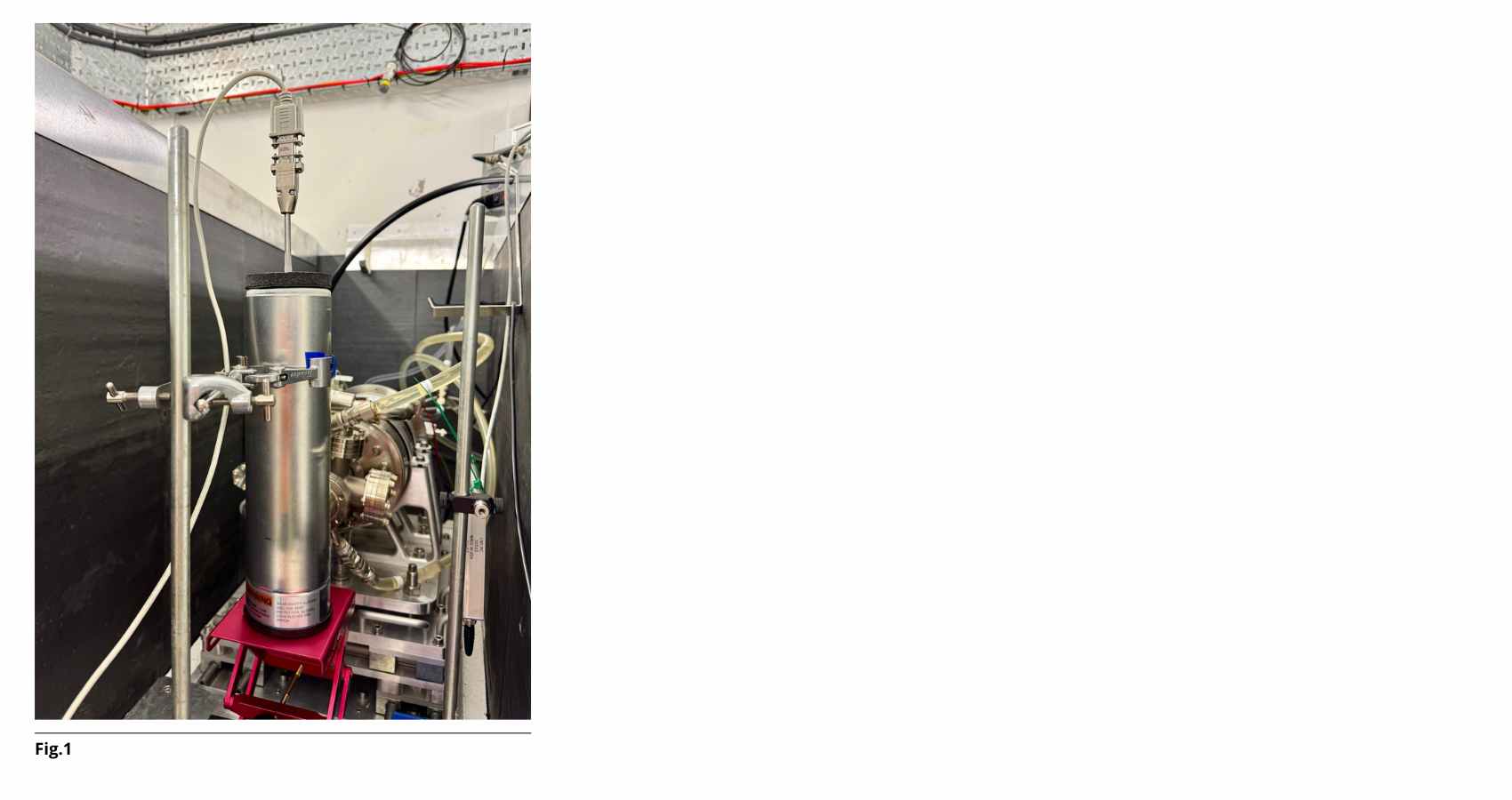
Fig.1 : SQUID irradiated with neutrons at the NILE facility, at ISIS, in the Rutherford Appleton Laboratory.