Information magazine of the Department of Industrial Engineering
Università di Trento
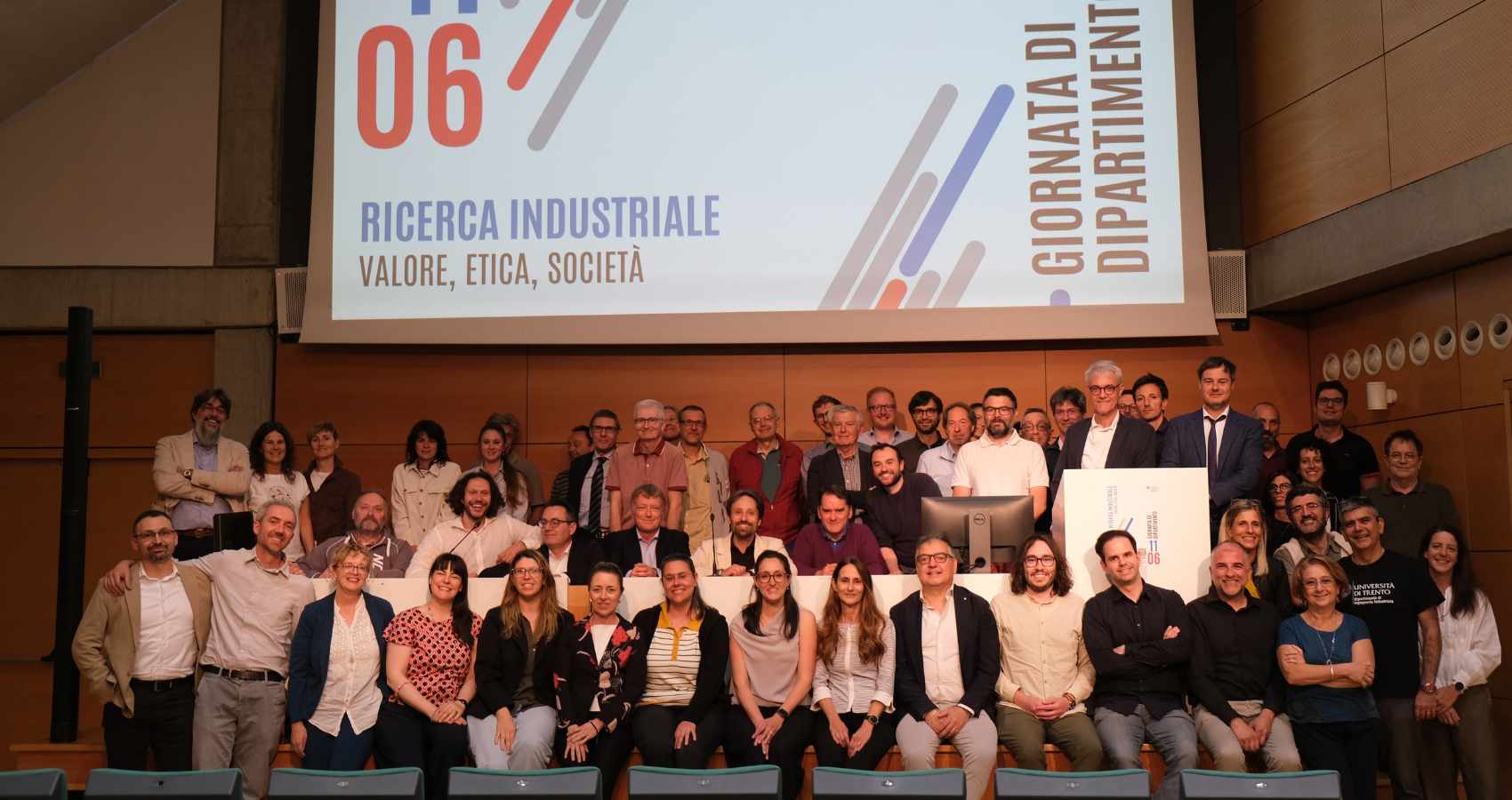
On June 11, 2026, the Department of Industrial Engineering of the University of Trento brought together faculty members, researchers, postdoctoral fellows, PhD candidates, and technical-administrative staff at the Mechatronics Hub in Rovereto for the Research Day, an event dedicated to discussing achievements, future challenges, and the role of industrial research in contemporary society.
More than simply an opportunity to present figures and results, the event was conceived as a moment to reflect on the meaning of research today: what value does it generate? What responsibilities does it entail? What contribution can it make to the economic, technological, and social development of the region and the country?
In his opening remarks, the Department’s Delegate for Research, Professor Matteo Benedetti, observed that organizing a day dedicated to research within a university department may seem “a bit like organizing a day dedicated to water for fish.” Yet, precisely because research lies at the heart of academic life, it is important to periodically pause and reflect on the path taken and on future directions.
These questions inspired the idea behind the Research Day: an opportunity to strengthen the sense of community and encourage dialogue among groups working in different fields but sharing the same mission.
The figures presented during the event confirm the vitality and project capacity of the Department. Today, DII includes 65 faculty members and researchers, around 70 PhD students, and 35 research fellows and postdoctoral researchers. Between 2020 and 2025, 332 project proposals were submitted, approximately 400 scientific papers per year were published, and 25 patents were filed.
Particularly noteworthy is the success achieved in competitive national and international programs, with two ERC Starting Grants and two projects funded by the Italian Science Fund (FIS), confirming the Department’s ability to compete in the most selective European and national research contexts.
The recognition of DII as a Department of Excellence for a second consecutive five-year period represents further acknowledgment of the quality of the research developed in recent years.
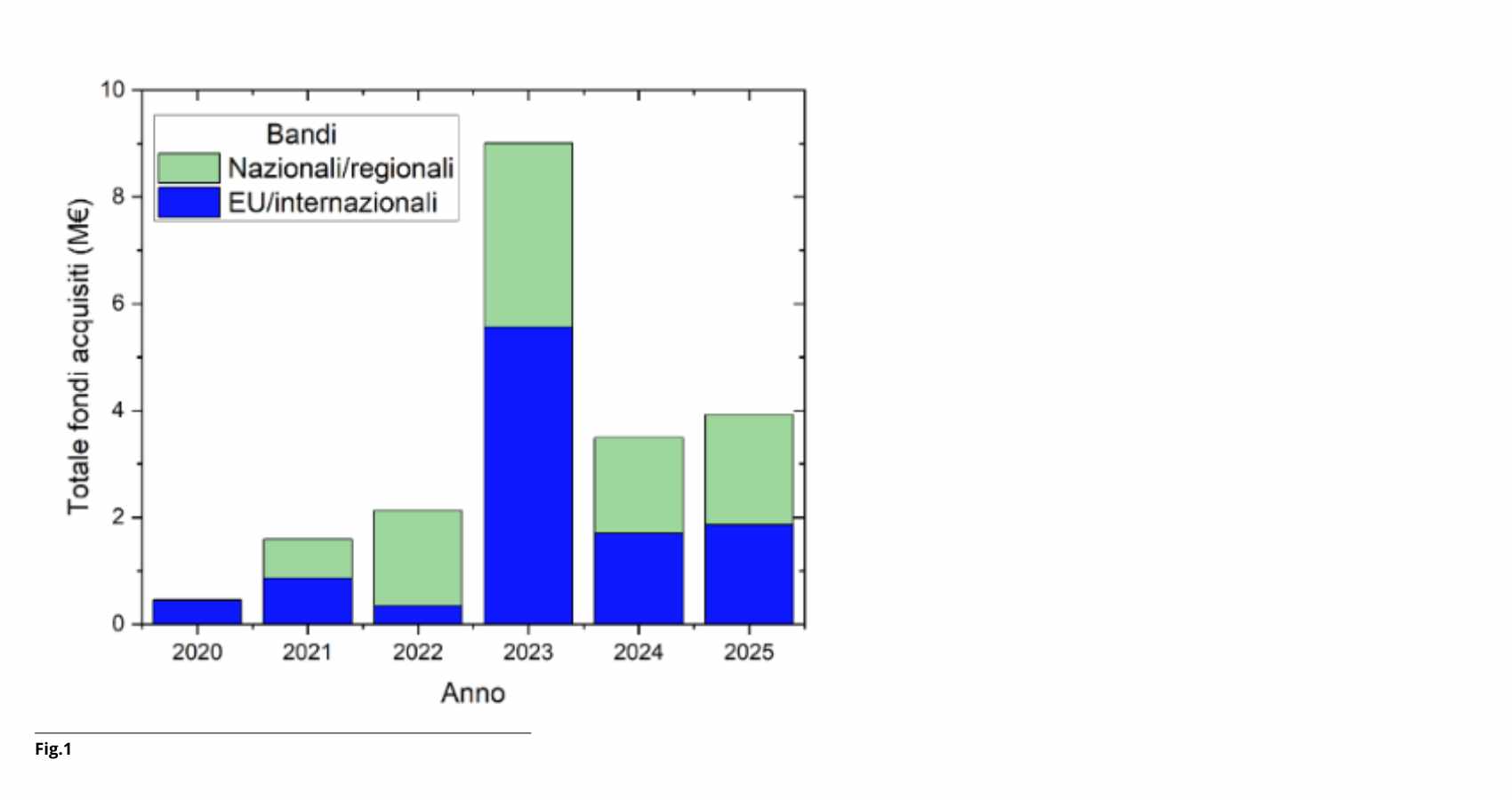
One of the most interesting findings presented during the event concerned the evolution of competitive funding acquired by the Department. Between 2020 and 2025, DII secured more than €20 million in new funding through European, national, and local programs. While 2023 was an exceptional year, partly due to opportunities offered by Italy’s National Recovery and Resilience Plan (PNRR), long-term trends reveal an even more significant result: excluding this extraordinary effect, acquired funding grew steadily, rising from approximately €500,000 in 2020 to nearly €4 million in 2025.
More than the absolute value itself, this structural growth demonstrates the strengthening of the Department’s project capabilities and the increasing competitiveness of its research groups.
[Figure 1 – Evolution of competitive funding acquired by DII between 2020 and 2025]
Considerable attention was devoted to the quality of scientific production and the results of the most recent Research Quality Assessment (VQR). The data show a steady increase in the Department’s international visibility: in recent years, the overall H-index rose from approximately 128 to 146, while the proportion of publications ranked among the top 10% worldwide increased from 9% to 20%.
The event also provided an opportunity to celebrate internal excellence. The DII Research Excellence Awards were presented to Matteo Saveriano in the junior category and Andrea Dorigato in the senior category, recognizing the scientific achievements and impact of their research activities.
The discussion also highlighted how the Italian university system is becoming increasingly competitive: differences among universities and departments are narrowing, and standing out now requires ever greater effort. In this context, DII continues to rank among the leading Italian Departments of Excellence in Area 09.
| University | Department | R1_2 |
| Ca’ Foscari University of Venice | Environmental Sciences, Informatics and Statistics | 1.09 |
| University of Sannio | Engineering | 1.08 |
| University of Pisa | Information Engineering | 1.06 |
| Sant’Anna School of Advanced Studies | Academic Class of Experimental Sciences | 1.06 |
| Polytechnic University of Milan | Management Engineering | 1.05 |
| Polytechnic University of Turin | Energy | 1.05 |
| University of Trento | Industrial Engineering | 1.04 |
| Polytechnic University of Bari | Mechanical Engineering, Mathematics and Management | 1.04 |
| University of Bologna | Department of Electrical, Electronic and Information Engineering “Guglielmo Marconi” | 1.04 |
| University of Naples Federico II | Industrial Engineering | 1.03 |
| University of Naples Federico II | Electrical Engineering and Information Technologies | 1.02 |
| University of Perugia | Engineering | 1.02 |
| University of Cagliari | Electrical and Electronic Engineering | 1.01 |
| University of Salerno | Information and Electrical Engineering and Applied Mathematics | 1.01 |
| University of Salerno | Industrial Engineering | 1.00 |
| University of Naples Federico II | Chemical Engineering, Materials and Industrial Production | 1.00 |
| Roma Tre University | Industrial, Electronic and Mechanical Engineering | 0.97 |
| Sapienza University of Rome | Mechanical and Aerospace Engineering | 0.96 |
| Mediterranea University of Reggio Calabria | Information Engineering, Infrastructure and Sustainable Energy | 0.94 |
[Figure 2 – Comparison between DII and the Departments of Excellence 2023–2027 in Area 09 based on the R1_2 indicator]
DII research has always been characterized by strong interaction with industry. During the 2023–2025 period, the Department managed 310 third-party contracts with a total value of approximately €3.9 million, accounting for around 31% of the University’s entire third-party activity.
However, the relationship with companies extends far beyond consultancy and applied research. Industrial PhDs, collaborative projects, and Innovation Agreements are increasingly important tools for promoting technology transfer and the development of advanced skills.
The second part of the day addressed issues that are expected to become increasingly central in the future: research ethics, science communication, the social responsibility of innovation, and the dual use of technologies. These are topics that require continuous reflection on the role of research in an increasingly complex and interconnected society.
The final round table and the short presentations by the research groups fostered mutual understanding among the different areas of the Department, creating new opportunities for discussion and potential collaborations.
The day concluded with a group photograph bringing together all components of DII: a symbolic image of a multidisciplinary community united by the common goal of generating knowledge, innovation, and value for society.
As repeatedly emphasized throughout the day, conducting research does not simply mean publishing papers or securing funding. It means educating future generations, supporting the competitiveness of industry, transferring knowledge, and contributing to the cultural and economic development of the territory.
This is the perspective with which DII intends to continue developing its activities, combining scientific excellence, responsibility, and impact.